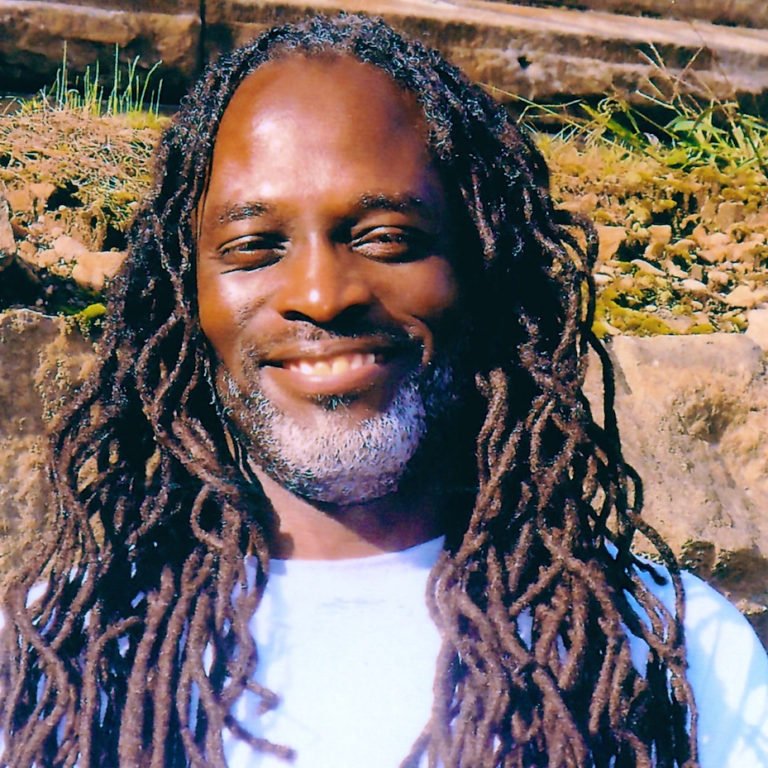

Shakeil Price: A plea deal I never knew existed cost me my freedom — and exposed how the system fails the people it’s supposed to protect.
I’ve gotten people off with less.” The confidence in the voice of my public defender had me believe I was going home soon. After that initial statement, never could I have imagined that I would be sentenced to life in prison.
My decision to go to trial wasn’t a fully informed one. The public defender assigned to my case, Mr. Somers, advised me that I was facing life in prison if I were to lose trial. He was extremely confident he would prevail because there was no direct evidence against me which led to his declaration that, “he had gotten people off with less.”
The Evidence Didn’t Add Up
All of the evidence pointed to my codefendant. He and Mr. Soto, the victim, were engaged in an altercation at a nightclub 18 minutes prior to Mr. Soto’s death. I was not present at the nightclub nor did any of the patrons place me there on the night in question. Mr. Soto came to my codefendant’s house, confronted him again, and was fatally shot on the scene following the initial altercation at the nightclub.
My codefendant’s girlfriend, Sheree, was also charged in the indictment as a codefendant. She gave two conflicting statements and the 2nd one implicated me. That was the only shred of evidence that tied me to the case. There was no weapon, no physical evidence, and the description of the shooter didn’t match mine. The shooter was described as a “light-skinned Hispanic man, almost white.” I am a brown-skinned Black man. Prosecutors also failed to disclose that Sheree had been shown a photo array containing my picture and she failed to make a positive identification. That vital information was withheld from us. It was only discovered by a thorough cross examination of the officer who did the photo array.
The Plea Deal I Never Knew About
The case was weak and strongly affecting Mr. Somers’ judgment. He was under the influence of overconfidence. This resulted in him failing to keep me apprised of the plea negotiations. He neglected to advise me of the state’s final plea offer of 20 years for reduced charges and what I was required to admit in order to receive that offer. The deal wasn’t disclosed to me because he didn’t want me to plead guilty and deprive him of the prestige points he would earn by winning a murder trial.
Not having that essential information, I blindly proceeded to trial. I wasn’t given an opportunity to weigh my options; risk losing trial and spend the rest of my life in prison or plead out to 20 years and serve 17 years before being released. I certainly would have taken responsibility for my role and accepted the plea bargain but I was denied that option because I wasn’t informed that the deal existed.
I expressed to the court on the day that I was sentenced that I was never informed of the state’s final plea bargain and the maximum sentence possibilities. The sentencing judge, Ferencz, who was assigned to oversee the trial 8 days before it started, assumed the prior judge had informed me of the sentencing consequences. He acknowledged my complaints and advised me to, “Take it up on appeal.”
The Long Road to an Evidentiary Hearing
And take it up on appeal I did. I entered a post conviction relief appeal stating Mr. Somers’ shortcomings and was finally granted an evidentiary hearing, after 11 painstaking years from the date of my arrest. State v. Price, No. A-1527-17T4 (App. Div. March 4, 2019). The Appellate Division ordered, “An evidentiary hearing should be held to determine what was the final plea bargain and if that offer was ever communicated to Mr. Price.” It would be another 3 agonizing years to actually get in front of a judge to begin the hearing.
The prosecutor, Neil Casey, who originally handled my case, testified at the hearing that he did in fact communicate a 20 year plea offer verbally to Mr. Somers. Unfortunately, I was never told about this 20 year plea offer for aggravated manslaughter. Mr. Somers also testified at the evidentiary hearing and he declared that he had no direct recollection of the plea nor could he recall ever speaking to me about it. He further stated under oath, “If there is no record of it, then I didn’t do it.”
The State of New Jersey has a court Rule 3:9-1(f) that mandates a defendant be informed of any plea offer in open court and the defendant’s decision must be stated for the record. I provided the necessary documentation and testimony to prove that the rule was not followed in my case. To my dismay, the judge denied to give me any relief and affirmed my life sentence.
Justice Denied
November 10th, 2022, the judge ruled that he was denying my petition for post-conviction relief because my lawyer must have told me about the plea offer because that is what a reasonable attorney would do. He disregarded the fact that Mr. Somers openly admitted to not informing me of the 20 year plea bargain in accordance with R. 3:9-1(f).
The judge read his decision. I sat and stared in disbelief.
Shakir, my youngest son, asked his older brother, “Sh’allah, what does that mean?” His voice snapped me back to reality.
“Daddy ain’t coming home no time soon.” Sh’allah whispered back.
I spun around in the chair, shackles on my wrist and ankles jingling. I faced the gallery of family and supporters who assembled for encouragement and locked eyes with my youngest son.
With tears welling up in my eyes, I said to him, “My fight for freedom don’t stop. I love all y’all. Hold ya head high and stay strong, because I get my strength from you.”
This is another example of an overzealous attorney putting his self-interest before that of his client. Destitute defendants from impoverished communities lack the resources to retain adequate representation and suffer the consequences of the attorney’s deficient performance. This occurs daily, in every courthouse across the country.
Shakeil Price #200947-c
#666160 NJSP
P.O.Box 861
Trenton, NJ 08625
Instagram: @FreeShakeilPrice