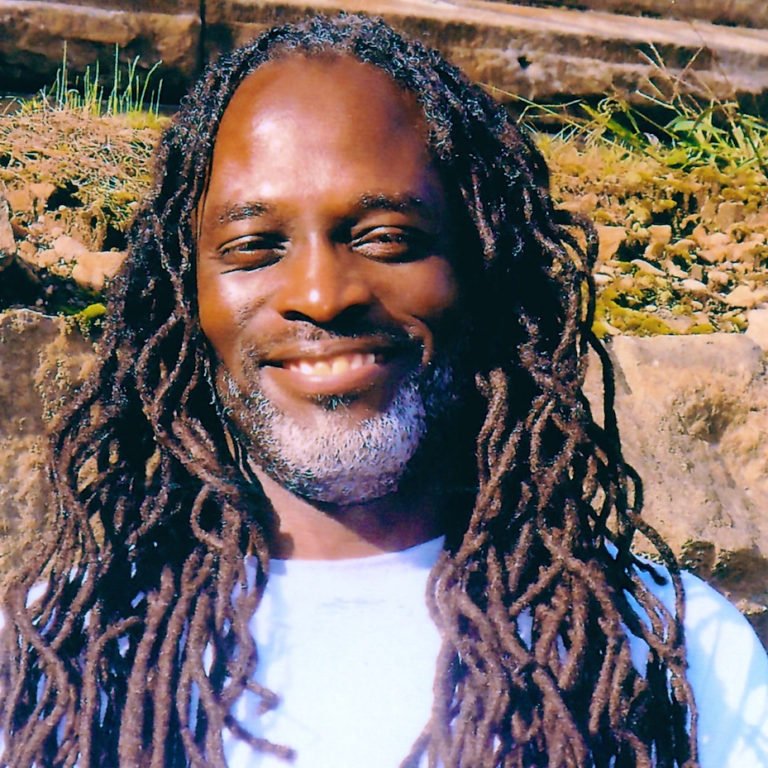

On the day I met Carlos, I was walking down 20th Street toward Vermont Avenue in South Central Los Angeles. My mother had just moved into a four-bedroom apartment thanks to the Section 8 housing program. I was going to the store with my sister’s boyfriend at the time, “Sam.”
As we were walking, a football nearly hit me, missing me by literal inches. I looked back and the thrower had a smirk on his face as if it were purposeful. My sister’s boyfriend, who looked like a gang member, told him, “Watch your balls,” and he immediately apologized.
After I told him, “I just moved here,” he asked if I wanted to play pass with him and another guy, Johnathan. I said I was going to the store and asked if I could still play when I came back. He said, “Yeah, for sure.” We shook hands, and me and Sam kept walking.
At this point he must have thought I was white because of my features and skin color, not to mention the fact that I had just left the boarding school, Boys Hope in Santa Ana, where I had come to be white-washed in my language skills. I didn’t realize any of this until I came back and went to the middle of the street to play and heard “the white boy’s back.” I still laugh at that till this day.
I was talking with slang within weeks of being around these guys. Not only that, but I was this timid kid who was scared to fight anyone — and within months of being on the block and doing body shots almost daily, I was a new person. Literally.
Carlos became one of my best friends and an asset during my transition. We just clicked. When the guys would start calling out fades (boxing matches), me and Carlos always avoided boxing each other.
For the next two years, from 2002 to 2004, we were closer than ever. The neighborhood gang had tried to recruit us several times, but me and Carlos were able to avoid being initiated. It was as though we gave each other the strength to say no and resist. It was like having support to be able to say no.
One day in November 2004, it was me, Carlos, and two other guys walking to the shoe warehouse to buy shoes. All our moms had received their welfare checks, and we all had $100 to go buy shoes. Carlos had his headphones blasting in his ear, so he did not join the conversation about which shoes we were going to buy and what we would do if there was money left over. I kept tapping him with excitement as we walked.
Out of nowhere, a burgundy station wagon pulled to the side and asked where we were from. None of us looked like gang members, so in fear we did not respond and kept walking. As we were walking, we saw them park the car and one gang member jumped out of the car. He ran toward us, so we ran into a nearby hotel. Carlos was the only one who did not run, as he still had his headphones in his ears and missed the whole commotion.
I heard one shot and was praying for my buddy to be okay. The hotel clerk called the police, and I ran back outside. No 15-year-old should ever have to see what I saw. It was my best friend, lying in a pool of blood with his headphones still in his ears. His eyes were closed, and he looked peaceful as ever. I knew my friend was gone. I started crying but I still had some type of hope, especially when I saw the ambulance approach.
The police, however, took forever to get there. When they did, I was eager to tell them what happened. I was not able to accompany my friend to the hospital, because I was kept at the scene of the crime and not questioned, but harassed. “Where you from? What are you doing here if you live way over on the other side? Are you high?” It was an endless barrage of questions, but never “What did you see?”
I had to tell him, crying, “Sir, we were going to buy shoes, and this burgundy station wagon pulled up and asked where we were from. We did not respond, and they parked. We saw a guy get out and run toward us, so we ran to the hotel. Only then did he back off.”
The officers put us in the back seat of the cop car, and I couldn’t understand why. They said we had to go give a statement at the police station, and then they would drop us off at home. It was my first time at the police station and I was petrified. They had us write down what happened and sign our names at the bottom. We were then dropped off at home, and I found my mom in tears.
She yelled, “Oh my gosh, where were you?” I broke down crying, and my mother rushed over and gave me a hug I had never had before. It was powerful and passionate. We cried in each other’s arms for maybe two minutes, and she apologized. I didn’t know if it was an apology for yelling at me or for my friend dying.
About five days later, my friend was buried. His mother kept saying, “Open the casket. I want to see my son” in Spanish. It was intense. All I could think about was revenge.
Not a month later, I was initiated as a member of a gang. I started being involved in crime and for a long time blamed myself for Carlos’ death. I would tell myself, “Why didn’t I remove his headphones or grab onto his shirt to run with me?” I still have nightmare flashbacks to this day and have been diagnosed with Post-Traumatic Stress Disorder.
After that, I joined a gang and became intensely involved in gang activity and did not care if I lived or died for the longest time. I just wanted my friend back, but he was gone.
I am currently doing a 33-year prison sentence for nonviolent crimes that revolved around my mental illness. I got involved with drugs as a coping mechanism for my PTSD. During one incident, I completely blacked out and ran into an occupied home. I immediately realized what I was doing and ran back out. Upon arrest I admitted to my wrong and expressed that I was not well mentally. Nobody cared and I was given 33 years.
All I could think about is how this system continues to fail me. I have psychological problems that to this day are not being properly addressed. It’s like jail is the easiest way to get rid of someone who is deeply pained and imbalanced.
I just know that if my friend Carlos were here today, I would not be going through this. But I have made a promise to my friend that when I do get out of here, I will bring awareness to PTSD and how it unfairly affects those who grow up in the hood. After all, I know that events unfolded the way they did for the greater good. It is my mission to crusade on behalf of those who have no voice or any way to express the true meaning of what it is to grow up in the ghetto and have to lose your best friend right before your eyes.
Sixteen year-old Carlos Renteria was killed on November 20, 2004.
Christian Victorian #BI2734
Calipatria State Prison
P.O. Box 5002
Calipatria, CA 92233-5002